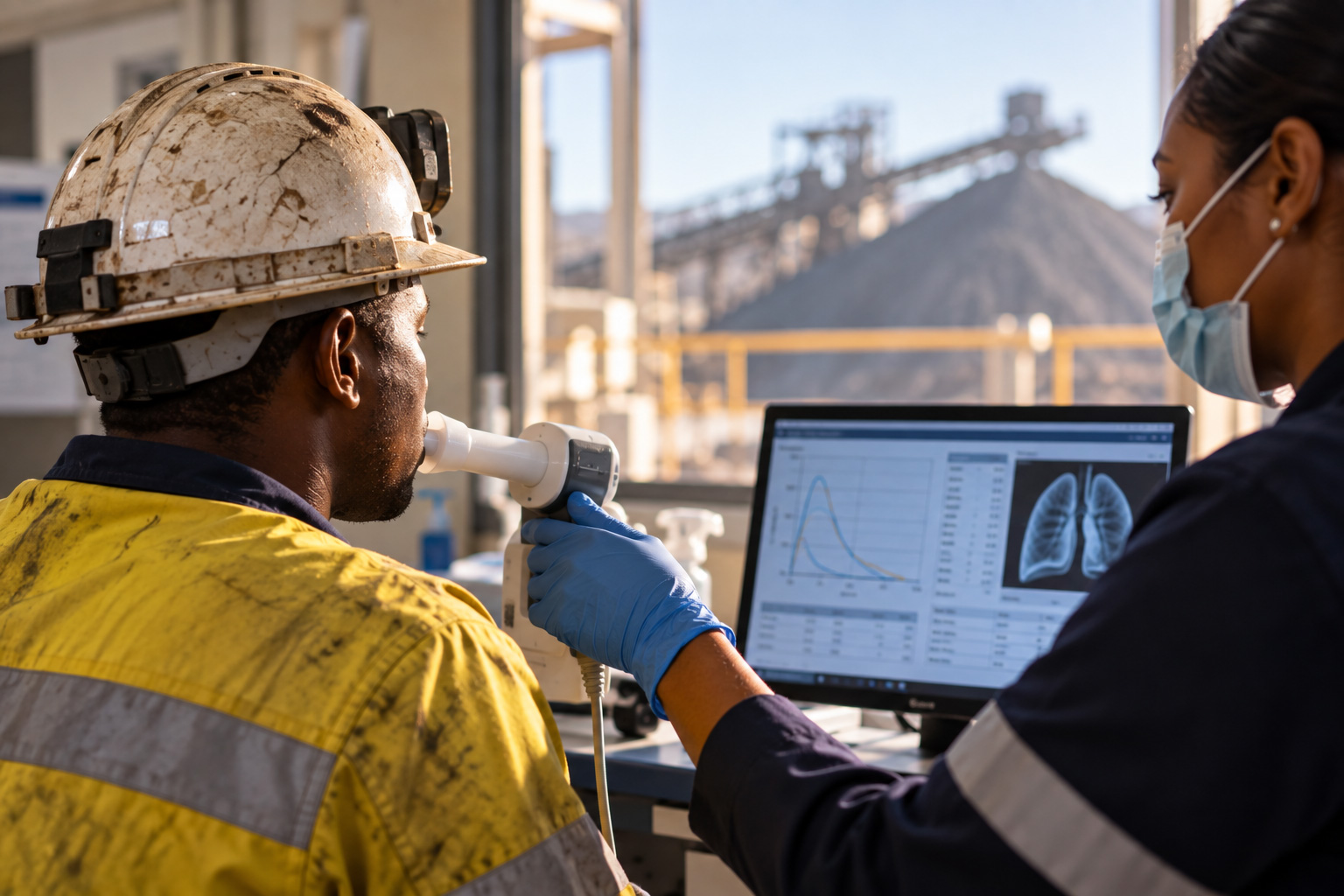
Occupational Health Surveillance: Turning Workforce Health Data Into Early Risk Signals
Mining companies collect an enormous amount of health and safety information.
Employees undergo medical examinations.
Dust, noise and heat exposure are monitored.
Occupational diseases are reported.
Fitness for work is assessed.
Incidents are investigated.
Yet collecting information is not the same as using it.
A medical-surveillance programme creates far greater value when the organisation moves beyond asking:
“Are we compliant?”
and starts asking:
“What is this information telling us about emerging risk across the operation?”
Occupational health surveillance can provide early warning signals long before a workforce health issue becomes a major operational problem.
Medical Surveillance Is a Legal Requirement in South African Mining
Medical surveillance is not optional for mining operations where employees are exposed to health hazards.
Under section 13 of the Mine Health and Safety Act, employers must establish and maintain an appropriate medical-surveillance system for employees exposed to occupational health hazards.
The Department of Mineral and Petroleum Resources explains that the system must be designed not only to detect occupational disease, but to provide information that can help employers eliminate, control and minimise health risks. DMPR: Occupational Medicine in Mining
That distinction matters.
Medical surveillance should not be viewed simply as a series of examinations employees need to pass.
The information generated should feed back into the organisation’s risk-management system.
Surveillance Is Different From a Once-Off Medical Examination
A medical examination provides information about an employee at a particular point in time.
Surveillance looks for patterns over time.
South African mining medical surveillance may include:
Initial medical examinations
Periodic examinations
Exit medical examinations
Clinical examinations
Audiometry
Lung-function testing
Biological monitoring where appropriate
Other risk-specific medical tests
The exact programme should reflect the hazards associated with the employee’s job and workplace exposures.
The DMPR notes that periodic examinations should be risk specific, taking account of both workplace exposure and the physical requirements of the occupation. DMPR: Annual Medical Reporting and Surveillance
The value lies not only in the individual result but in what repeated results begin to reveal.
The Real Question Is Whether Health Is Changing
Imagine a group of employees working in similar conditions.
One hearing test shows a slight change.
That may require individual follow-up.
But suppose repeated surveillance begins showing similar hearing deterioration across several workers from the same occupational group.
That tells the operation something different.
The issue may no longer be only an individual medical concern.
It may indicate the need to investigate:
Noise exposure
PPE effectiveness
Equipment
Maintenance
Work practices
Training
Time spent in high-noise areas
This is where occupational-health surveillance becomes an operational risk tool.
Exposure Data and Medical Data Should Inform One Another
Mining operations already generate occupational-hygiene data.
Employees may be monitored for exposure to:
Airborne pollutants
Silica and other dusts
Noise
Heat
Cold
Radiation
Other workplace hazards
The DMPR states that occupational-hygiene measurements for significant hazards must be recorded and that exposure records should be linked to employees’ medical-surveillance records. DMPR: Occupational Hygiene in Mining
That connection is powerful.
Exposure monitoring tells you:
What was the worker exposed to?
Medical surveillance helps answer:
Is that exposure beginning to affect health?
Looking at either dataset in isolation provides only part of the picture.
Health Data Can Reveal Whether Controls Are Working
Mining uses the hierarchy of controls to reduce occupational-health risks.
An operation may implement:
Engineering controls
Ventilation
Dust suppression
Noise control
Work-practice changes
PPE
Exposure-time limits
But implementing a control is not the same as proving it is effective.
Medical and exposure trends can help evaluate whether risk controls are achieving their intended outcome.
For example, after changing a dust-control system, an operation could monitor whether:
Exposure measurements improve
Respiratory indicators stabilise
New disease incidence declines
High-risk occupational groups show better outcomes
This turns health surveillance into a feedback loop.
Identify risk → implement control → monitor exposure → monitor health → evaluate effectiveness → adjust controls.
That is far more valuable than treating medical examinations as an isolated compliance activity.
Occupational Disease Still Matters
South Africa has made progress in reducing occupational disease in mining, but the burden has not disappeared.
The Mine Health and Safety Inspectorate’s 2024/25 Annual Report recorded 1,723 occupational-disease cases in 2024, down from 1,864 in 2023.
The industry incidence rate declined from 33.3 to 31.3 cases per 10,000 employees.
The report also recorded approximately 549,878 employees through Annual Medical Reports during 2024. DMPR: Mine Health and Safety Inspectorate 2024/25 Annual Report
A declining national trend is positive.
But individual mines still need to understand their own risk profile.
Industry averages do not tell you what is happening in a particular shaft, occupation, contractor group or exposure category.
Different Commodities Can Show Different Risk Patterns
Mining is not one uniform working environment.
A gold operation may have a different occupational-health profile from:
Coal
Platinum
Chrome
Iron ore
Manganese
Diamond
Copper
The 2024 MHSI data showed that occupational-disease cases declined in some commodity groups while increasing in others.
This reinforces why surveillance needs to be operation-specific.
Even two mines producing the same commodity can have different:
Mining methods
Depths
Equipment
Ventilation
Workforce demographics
Exposure patterns
Work schedules
The surveillance system needs to reflect the mine that actually exists.
Look Below the Mine-Wide Average
One of the risks of aggregated data is that it can hide smaller problem areas.
Suppose the mine-wide hearing-loss rate appears stable.
That sounds reassuring.
But what if one occupational group is showing steady deterioration?
Or one shaft?
Or employees operating one particular category of machine?
Useful analysis may require breaking information down by:
Occupation
Workplace
Shaft
Business unit
Exposure group
Age group
Length of service
Contractor status
Hazard type
The aim is not to search for someone to blame.
It is to identify where controls may need attention.
Noise-Induced Hearing Loss Is a Good Example
Noise-induced hearing loss remains one of the occupational diseases recognised within South African mining surveillance. DMPR: Common Occupational Diseases in Mining
Audiometry can identify individual hearing changes.
But aggregated audiometric trends can also help answer operational questions.
For example:
Which occupations show the greatest changes?
Are cases clustered around particular equipment?
Is hearing protection being used correctly?
Are noise controls sufficient?
Are maintenance problems increasing exposure?
Are workers receiving adequate training?
The diagnosis is individual.
The prevention opportunity may be organisational.
The Same Applies to Respiratory Disease
Airborne pollutants remain a major occupational-health consideration in mining.
The DMPR’s occupational-health guidance lists conditions including:
Silicosis
Coal workers’ pneumoconiosis
Silico-tuberculosis
Pulmonary tuberculosis
Asbestosis
among the occupational diseases encountered in the sector. DMPR: Occupational Medicine in Mining
Respiratory surveillance should therefore connect logically with exposure data.
If lung-function trends are worsening in an exposure group, the operation should not simply wait for more employees to meet the diagnostic threshold for disease.
It should ask whether something upstream has changed.
Health Surveillance Can Detect a Problem Before Compensation Claims Rise
Compensation data tells an organisation what has already happened.
Surveillance has the potential to reveal what may be developing.
That distinction is important.
A rise in compensated occupational-disease cases is a late signal.
Earlier signals may include:
Gradual hearing changes
Declining lung-function trends
Increasing abnormal surveillance results
Repeated temporary restrictions
Increased referrals
Higher levels of medical incapacity
Changes in exposure measurements
The earlier an organisation identifies the pattern, the more opportunities it has to intervene.
Medical Incapacity Can Also Provide Useful Insight
The DMPR recognises medical incapacity as an important challenge because it can affect both employee livelihoods and mine productivity. DMPR: Medical Incapacity and Occupational Medicine
A rising number of employees requiring restrictions or alternative placement may indicate broader workforce-health pressures.
Operations can analyse patterns such as:
Which occupations generate the most incapacity cases?
Which conditions are most common?
At what stage of employment are they occurring?
Are cases associated with particular exposures?
Are return-to-work processes effective?
Could earlier intervention have prevented deterioration?
Again, individual medical information must remain confidential.
But anonymised trends can still support organisational decision-making.
Non-Communicable Diseases Are Becoming Part of the Mining Health Picture
Occupational-health systems have traditionally focused strongly on workplace-induced disease.
That remains essential.
But mining operations are also managing employees with conditions such as:
Hypertension
Diabetes
Cardiovascular disease
Obesity
Mental-health disorders
In 2025, the Mine Health and Safety Council published a dedicated Guidance Note for the Prevention and Management of Non-Communicable Diseases and Mental Health Disorders in the South African Mining Industry. MHSC: Promulgated Guidance Notes
This reflects how occupational health is becoming broader.
The question is no longer only:
“Did work cause this disease?”
It is also:
“Could this health condition affect the employee’s ability to work safely, and how should it be managed?”
Surveillance Should Support Prevention, Not Punishment
Employees may become suspicious of medical-surveillance programmes if they believe a poor result automatically threatens their job.
That can discourage honest reporting.
An effective system should reinforce that surveillance exists to:
Protect health
Identify risk early
Support fitness for work
Guide treatment
Improve workplace controls
Enable appropriate accommodation where necessary
Medical information should not become a disciplinary tool.
Trust matters because employees need to feel safe reporting symptoms before they become severe.
Confidentiality Is Fundamental
Occupational-health surveillance involves sensitive medical information.
That information needs to be handled carefully.
The DMPR states that individual medical-surveillance records must be kept as confidential records for at least 40 years.
Long retention periods make sense because some occupational diseases develop only after long latency periods.
But management does not need access to individual diagnoses in order to use occupational-health information strategically.
Aggregate reporting can identify trends without exposing personal medical information.
The Annual Medical Report Is Designed Around Aggregated Information
Section 16 of the Mine Health and Safety Act requires occupational medical practitioners to compile annual medical reports based on surveillance records without identifying individual employees.
The report is shared with the employer, health and safety structures and the Medical Inspector. DMPR: Annual Medical Reporting
This demonstrates an important principle.
Mine management can receive meaningful workforce-health intelligence without needing to know that a particular employee has a particular condition.
Reporting Should Not Be Treated as an Administrative Deadline
The Annual Medical Report must be submitted to the Mine Health and Safety Inspectorate, generally before the end of February for the preceding reporting period.
For some organisations, reporting can become an annual administrative exercise.
Complete the forms.
Submit them.
Move on.
But the information should also be reviewed internally.
Ask:
What changed from last year?
Which conditions increased?
Which exposure groups worsened?
Are new patterns appearing?
What requires investigation?
Which controls should be reviewed?
A report becomes useful when it influences decisions.
Trend Data Is More Valuable Than a Single Number
Suppose an operation records five cases of a particular health issue.
Is that good or bad?
The number alone may tell you very little.
Trend analysis provides context.
Were there:
Two cases last year?
Ten?
Fifty?
Did workforce numbers change?
Did exposure levels change?
Did medical-surveillance participation improve?
Did diagnostic criteria change?
Good health-risk analysis looks for movement rather than isolated numbers.
Contractor Health Data Should Not Sit Outside the Picture
Mining operations often rely extensively on contractors.
If contractors perform similar work and experience similar hazards, excluding their health data can create an incomplete picture of workforce risk.
The DMPR’s Annual Medical Report requirements include employees under medical surveillance, including relevant contractors.
Operational risk does not disappear because a worker is employed by another legal entity.
The surveillance strategy should reflect actual exposure on site.
Exit Examinations Are Important for Long-Latency Disease
Some occupational diseases do not become obvious while an employee is still actively working.
The Mine Health and Safety Act therefore requires exit medical examinations for workers who were subject to medical surveillance.
The DMPR notes that these examinations should generally be arranged within 30 days after termination of employment.
Exit records help establish an important health baseline.
They can also support workers who develop occupational disease after leaving the mine.
This is particularly relevant where conditions have long latency periods.
Data Quality Determines the Quality of the Insight
Health analytics cannot compensate for poor underlying information.
Surveillance systems need consistent:
Employee identifiers
Occupational classifications
Exposure-group information
Job histories
Medical coding
Test standards
Contractor information
If one system categorises employees differently from another, linking exposure and health outcomes becomes difficult.
Mining operations therefore need to think about occupational-health data architecture, not only individual medical systems.
Occupational Health and Occupational Hygiene Need to Talk to Each Other
An occupational-health department may identify a medical trend.
An occupational-hygiene department may identify an exposure trend.
If the two datasets are never reviewed together, the organisation may miss the connection.
Regular multidisciplinary review can bring together:
Occupational medicine
Occupational hygiene
Safety
Operations
Engineering
HR
Risk management
This allows the organisation to ask whether health trends correspond with changes in workplace conditions.
Technology Can Make Trends Easier to See
Digital systems can help move occupational-health reporting beyond spreadsheets and annual summaries.
Depending on the operation, dashboards may track:
Surveillance completion
Abnormal results
Referrals
Exposure groups
Occupational disease
Incapacity
Restrictions
Return-to-work cases
The objective is not to create more data.
It is to make existing data easier to interpret.
A dashboard that simply displays hundreds of numbers is not necessarily useful.
Decision-makers need to know:
What changed?
Where?
Why might it have changed?
What needs investigation?
Health Data Should Connect to the Risk Register
If occupational-health surveillance identifies an emerging pattern, that information should not remain isolated in the medical department.
Material findings may need to influence:
Risk assessments
Controls
Mine planning
Equipment decisions
Workforce deployment
Training
Capital expenditure
Contractor management
For example, repeated evidence of excessive noise exposure combined with declining hearing outcomes may strengthen the business case for engineering controls.
Health surveillance then becomes part of operational planning.
Leadership Needs a Meaningful Health Dashboard
Executives do not need individual clinical records.
But they should understand workforce-health risk.
A useful leadership view may include trends such as:
Occupational-disease incidence
Exposure exceedances
Medical-surveillance completion
Fitness-for-work restrictions
Disease categories
High-risk exposure groups
Contractor trends
Medical-incapacity patterns
The goal is to give leaders enough information to ask the right questions.
The Best Surveillance Programme Prevents Future Cases
A programme should not be judged only by how efficiently it conducts medical examinations.
A better question is:
Does the information generated actually reduce future exposure and disease?
That aligns directly with the purpose of South Africa’s mining legislation.
The Mine Health and Safety Act is designed around identifying hazards and eliminating, controlling and minimising health and safety risk.
Medical surveillance contributes to that goal when the results feed back into prevention.
How 98 Degrees Group Can Support Mining Operations
98 Degrees Group’s Mining Advisory & Risk Solutions take an integrated view of mining risk.
This includes the relationship between:
Occupational health
Occupational hygiene
Workforce healthcare
Employee benefits
Operational risk
Compliance
Business continuity
Our work with Harmony Gold’s Ernest Oppenheimer Hospital demonstrates this integrated approach, including dedicated occupational-health programmes addressing mining-related respiratory conditions, hearing loss and musculoskeletal risk. 98 Degrees Group: Harmony Gold’s Ernest Oppenheimer Hospital case study
The objective is not simply to generate more health information.
It is to help organisations understand what that information means for the workforce and the operation.
Turn Medical Surveillance Into Risk Intelligence
Medical surveillance is already an established part of South African mining.
The opportunity is to make better use of what it reveals.
Instead of viewing medical examinations purely as a compliance requirement, mines can use health information to:
Detect emerging risks
Test whether controls are working
Identify vulnerable exposure groups
Support earlier medical intervention
Inform occupational-hygiene strategies
Strengthen operational decision-making
98 Degrees Group discussed the broader value of this proactive approach in Managing Health and Safety Risks in the Mining Industry: A Proactive Approach.
The principle is simple:
The earlier a risk becomes visible, the more opportunities there are to manage it.
From Compliance Data to Prevention
Every occupational-health record tells you something about one employee.
Together, those records can tell you something about an operation.
The organisations that gain the most value from surveillance will be those that connect medical results with exposure, occupation, location and time — while maintaining employee confidentiality.
Because the purpose of surveillance should not simply be to document occupational disease after it occurs.
It should help prevent the next case.
Good occupational-health surveillance does more than measure workforce health. It helps the operation see risk sooner.