Workplace Health Screening: Making Early Detection Count Beyond Wellness Day
Many organisations run a wellness day at least once a year.
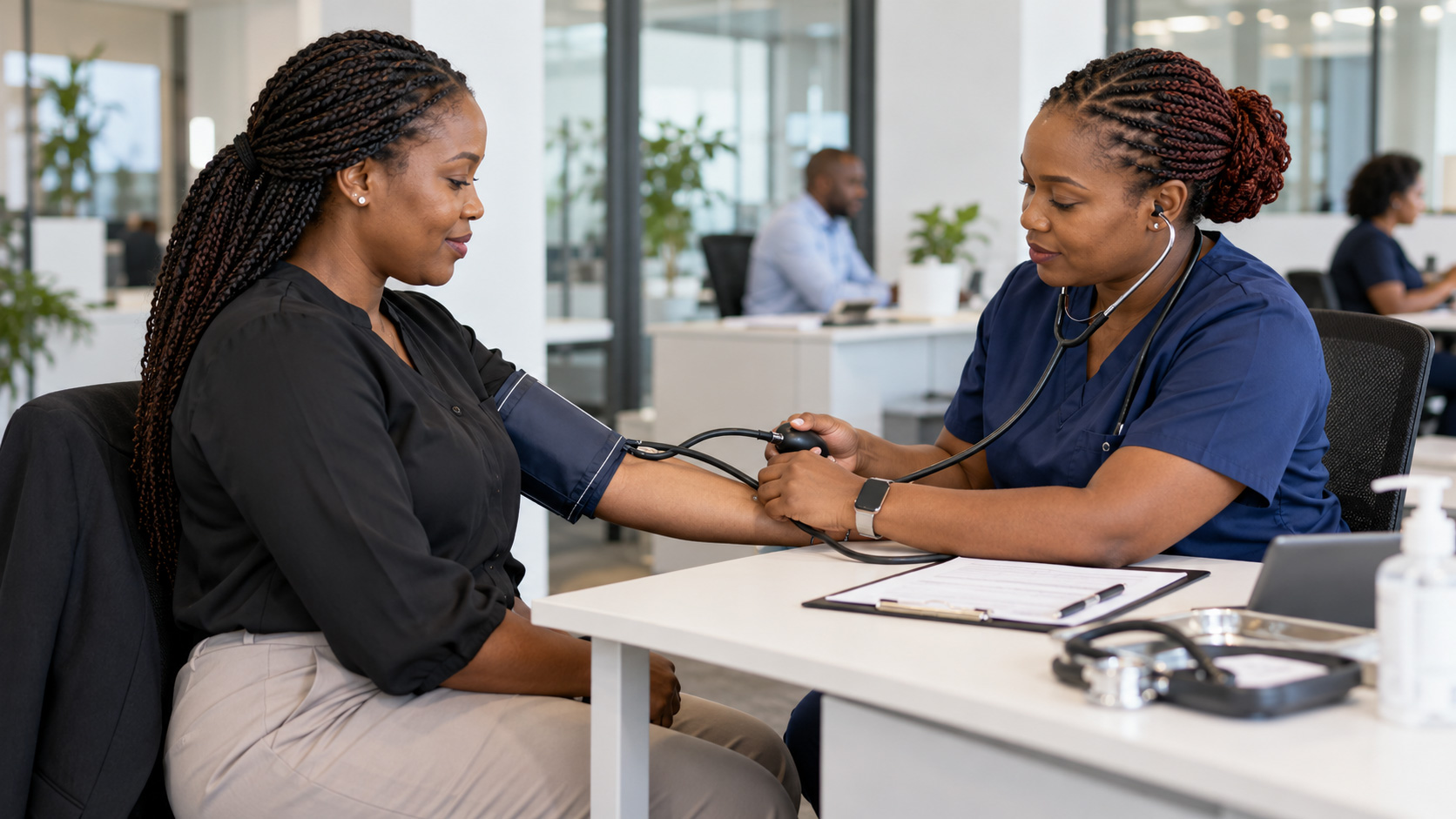
Blood pressure is checked.
Blood glucose is tested.
Cholesterol, body mass index and sometimes HIV status are measured.
Employees receive a slip of paper with their numbers, and the event is recorded as a success.
But what happens next?
An abnormal result is only useful if it leads to action. A high blood-pressure reading that is never followed up does not protect an employee. It simply documents a risk that remains untreated.
October is Breast Cancer Awareness Month, a useful reminder that early detection saves lives. In the workplace, the same principle applies across a wide range of conditions. Screening is the first step. Follow-up is where the value is created.
Why Early Detection Matters in the Workplace
Many of the conditions that drive absenteeism, incapacity and early death develop quietly.
High blood pressure often causes no symptoms.
Type 2 diabetes can go undiagnosed for years.
High cholesterol cannot be felt.
Some cancers, including breast and cervical cancer, can be treated far more effectively when they are found early.
By the time symptoms appear, treatment is often more complex, more expensive and less effective.
For employers, late diagnosis can mean:
- Longer periods of sick leave
- Higher healthcare and benefit costs
- More incapacity claims
- Loss of experienced staff
- Reduced productivity while employees work with unmanaged conditions
Early detection helps shift the focus from crisis to prevention.
A Screening Event Is Not a Screening Programme
A once-off wellness day can raise awareness and identify people at risk.
But a screening programme asks broader questions:
- Who was screened, and who was not?
- How many employees had abnormal results?
- How many were referred?
- How many actually completed the referral?
- How many are now on treatment and being monitored?
Without these answers, an organisation may know that it ran a wellness day, but not whether that day made a difference to anyone’s health.
The Follow-Up Gap
The gap between screening and treatment is one of the biggest weaknesses in many workplace health initiatives.
Employees may not follow up because:
- They do not understand what the result means
- They feel healthy and assume the reading was wrong
- They cannot take time off work to visit a clinic
- They are worried about the cost
- They fear what a diagnosis could mean for their job
- They simply forget once the event is over
Each of these barriers can be addressed. But only if the programme is designed with follow-up in mind from the start.
Explaining Results Matters
A number on a slip of paper means very little to most people.
An employee who is told that their blood pressure is “a bit high” may not realise that it significantly increases their risk of stroke, heart attack and kidney disease.
Screening programmes should include a short, clear conversation about:
- What the result means
- Why it matters
- What the next step is
- How soon it should happen
Understanding drives action.
Make the Next Step Easy
The more difficult the referral process, the fewer employees will complete it.
Practical ways to reduce barriers include:
- Booking follow-up consultations on the day of screening
- Offering follow-up through telemedicine, so employees do not need to leave work or travel
- Making sure employees know what is covered by their medical scheme or benefit
- Providing referral letters that are easy to understand
- Sending reminders after the event
Digital access can play an important role here. As discussed in our article on Digital Primary Healthcare: Why Access Matters as Much as Employee Benefits, a benefit only works when employees can actually reach care.
Women’s Health Should Be Part of the Programme
Breast and cervical cancer are among the most common cancers affecting women in South Africa.
Workplace programmes can support early detection by:
- Including breast awareness education and examinations at wellness events
- Promoting cervical screening and making referrals easy
- Providing information on where mammograms and Pap smears can be accessed
- Scheduling women’s health days at times that suit shift patterns
Men’s health matters too. Prostate health, cardiovascular risk and mental health are areas where men often delay seeking help.
Confidentiality Is Non-Negotiable
Employees will only participate honestly if they trust that their health information is protected.
Health information is classified as special personal information under the Protection of Personal Information Act (POPIA). It requires careful handling.
Employers should receive aggregated, anonymised data that shows trends across the workforce, not individual results.
Employees should know:
- Who will see their results
- How their information will be stored
- That their results will not be used against them
Trust is the foundation of participation.
Use Aggregated Data to Shape Strategy
When handled correctly, screening data can provide valuable insight.
If a large proportion of employees at one site have elevated blood pressure, that may point to a need for targeted hypertension management.
If diabetes risk is rising across the workforce, nutrition and lifestyle interventions may be needed.
If participation is low in certain departments or shifts, the programme may need to change its timing or location.
Year-on-year trends are more valuable than a single snapshot.
Measure Outcomes, Not Attendance
Many programmes report the number of employees screened.
That is a useful starting point, but it is not an outcome.
More meaningful measures include:
- The percentage of high-risk employees who completed a follow-up consultation
- The number of employees newly diagnosed and started on treatment
- Improvements in blood pressure or glucose control over time
- Changes in absenteeism linked to chronic conditions
What gets measured shapes what gets managed.
Chronic Conditions Need Ongoing Support
A diagnosis is not the end of the process.
Employees with hypertension, diabetes or other chronic conditions need regular monitoring, medication adherence and lifestyle support.
Workplace health strategies can help by:
- Providing access to ongoing consultations
- Supporting medication collection and adherence
- Offering health coaching or education
- Allowing reasonable time for medical appointments
Managing chronic conditions well protects both the employee and the organisation.
How 98 Degrees Group Can Support Employers
98 Degrees Group works with employers, unions and institutions to design healthcare strategies that go beyond once-off events.
This includes helping organisations:
- Design screening programmes with built-in follow-up
- Improve access to care through digital primary healthcare, including TruMD Telemedicine Services
- Use aggregated health data to identify workforce risk
- Align healthcare initiatives with employee benefits and organisational goals
Explore our approach to Healthcare & Medical Solutions.
From Screening to Prevention
A wellness day can start an important conversation.
But the real value lies in what happens after the event.
Early detection only works when it leads to early action.