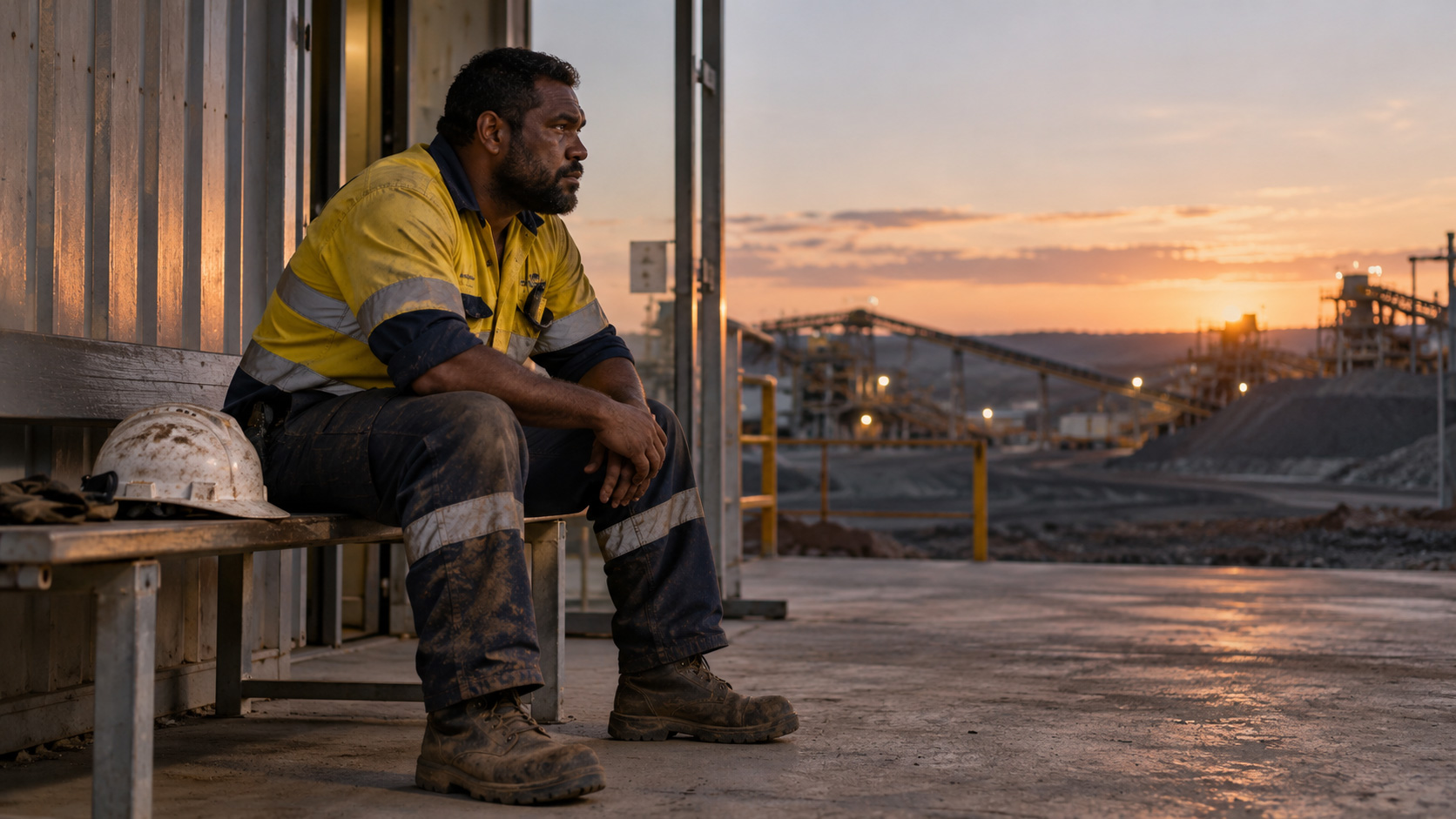
Mental Health in Mining: Why Psychological Wellbeing Is a Safety Issue
In mining, safety performance is usually measured through incidents, near misses and lost-time injuries.
Physical hazards are well understood.
Ground conditions, machinery, dust, noise and heat all have established controls.
Mental health is often viewed differently.
It is placed under wellness, employee assistance or HR.
But a worker who is exhausted, distressed, intoxicated or distracted is a safety risk, whatever the underlying cause.
World Mental Health Day on 10 October is a timely reminder that psychological wellbeing belongs in the mining risk conversation.
The Scale of the Problem
The World Health Organization and International Labour Organization estimate that around 12 billion working days are lost globally each year to depression and anxiety, at a cost of nearly US$1 trillion in lost productivity.
Mining is not immune.
In fact, several features of mining work can increase psychological strain.
The Mine Health and Safety Council has also published guidance on non-communicable diseases and mental health disorders, reflecting growing recognition that these conditions form part of the mining health picture.
Why Mining Work Can Be Psychologically Demanding
Mining environments often combine multiple stressors:
- Long shifts and rotating rosters
- Physically demanding work in hazardous conditions
- Working underground, in confined spaces or in isolation
- Long periods away from family for migrant workers
- Living in hostels or shared accommodation
- Exposure to serious incidents, injuries or fatalities
- Job insecurity linked to commodity cycles and restructuring
- Financial pressure, including household debt
Individually, these factors may be manageable.
Together, and over time, they can take a significant toll.
How Mental Health Affects Safety
Poor mental health can affect the very capabilities that safe work depends on:
- Concentration and attention
- Reaction time
- Decision-making
- Communication with colleagues
- Willingness to follow procedures
- Ability to recognise hazards
A worker preoccupied with financial stress, grief or untreated depression may miss warning signs that would normally be obvious.
Fatigue and Mental Health Are Closely Linked
Poor sleep is both a symptom and a cause of mental health problems.
Depression and anxiety can disrupt sleep.
Shift work and long hours can worsen mood and resilience.
As discussed in our article on Fatigue Risk in Mining, tired workers become an operational risk.
Managing fatigue and mental health together creates a more complete picture.
Substance Use Is Often a Coping Mechanism
Alcohol and drug use remain significant concerns in many mining operations.
For some workers, substance use develops as a way of coping with stress, trauma, loneliness or pain.
Testing programmes are important for identifying impairment.
But testing alone does not address why the problem developed.
Detection should be linked to support, not only discipline.
Operations that combine fitness-for-work testing with access to counselling and treatment are more likely to return workers safely to productive duty.
Trauma After Incidents
Mining incidents can be deeply traumatic.
Workers who witness serious injuries or fatalities, or who are involved in rescues, may experience:
- Flashbacks and intrusive memories
- Difficulty sleeping
- Anxiety when returning underground
- Irritability or withdrawal
- Increased use of alcohol
Structured trauma support after incidents, including debriefing and access to counselling, can help prevent longer-term psychological harm.
It also signals that the organisation values its people beyond their productivity.
Stigma Remains a Major Barrier
Many mine workers are reluctant to speak about mental health.
There may be concerns that:
- They will be seen as weak
- They will be declared unfit for work
- Their job could be at risk
- Colleagues or supervisors will find out
Where these fears exist, problems remain hidden until they result in an incident, absenteeism or a crisis.
Confidentiality and a non-punitive approach are essential.
Supervisors Are the Front Line
Supervisors and team leaders are often best placed to notice changes in behaviour, such as:
- Increased absenteeism or late arrival
- Irritability or conflict
- Withdrawal from the team
- A decline in work quality
- Signs of intoxication
Training supervisors to recognise warning signs and respond appropriately can make a significant difference.
They do not need to be counsellors.
They need to know how to start the conversation and where to refer.
Mental Health Should Be on the Risk Register
When mental health is treated purely as an employee-assistance matter, it is often under-resourced and poorly measured.
Integrating it into risk management means:
- Identifying psychosocial hazards in the workplace
- Assessing their likely impact on safety and production
- Implementing controls, such as roster design, supervision and support services
- Monitoring indicators over time
Useful indicators may include employee assistance programme utilisation, substance-related incidents, absenteeism patterns and aggregated health surveillance data.
Access to Care Must Be Practical
Support only works if workers can reach it.
On remote sites or across rotating shifts, traditional office-hours counselling may be difficult to access.
Options that can improve access include:
- Telephonic and digital consultations
- On-site counselling at times that suit shift patterns
- Peer-support programmes
- Clear referral pathways to psychologists and psychiatrists
How 98 Degrees Group Can Support Mining Operations
98 Degrees Group works with mining operations to build health and risk strategies that reflect the full range of workforce risks.
This includes helping operations:
- Integrate mental health into occupational health and risk frameworks
- Improve access to primary and mental healthcare, including through digital channels
- Use aggregated health data to identify emerging trends
- Align employee benefits with workforce wellbeing
Find out more about our Mining Advisory & Risk Solutions.
A Safe Mine Needs a Healthy Mind
Physical controls protect workers from the hazards around them.
Mental health support helps protect them from the pressures they carry with them.
In mining, psychological wellbeing is not separate from safety. It is part of it.